Custom Patio Covers · Shade Structures
Custom attached and freestanding patio covers designed around your home, your property and the Texas heat.
Patio Cover Options
Choose the style, structure and roof that fit your home, your property and the way you want to use the space. We’ll help you weigh the options on site.
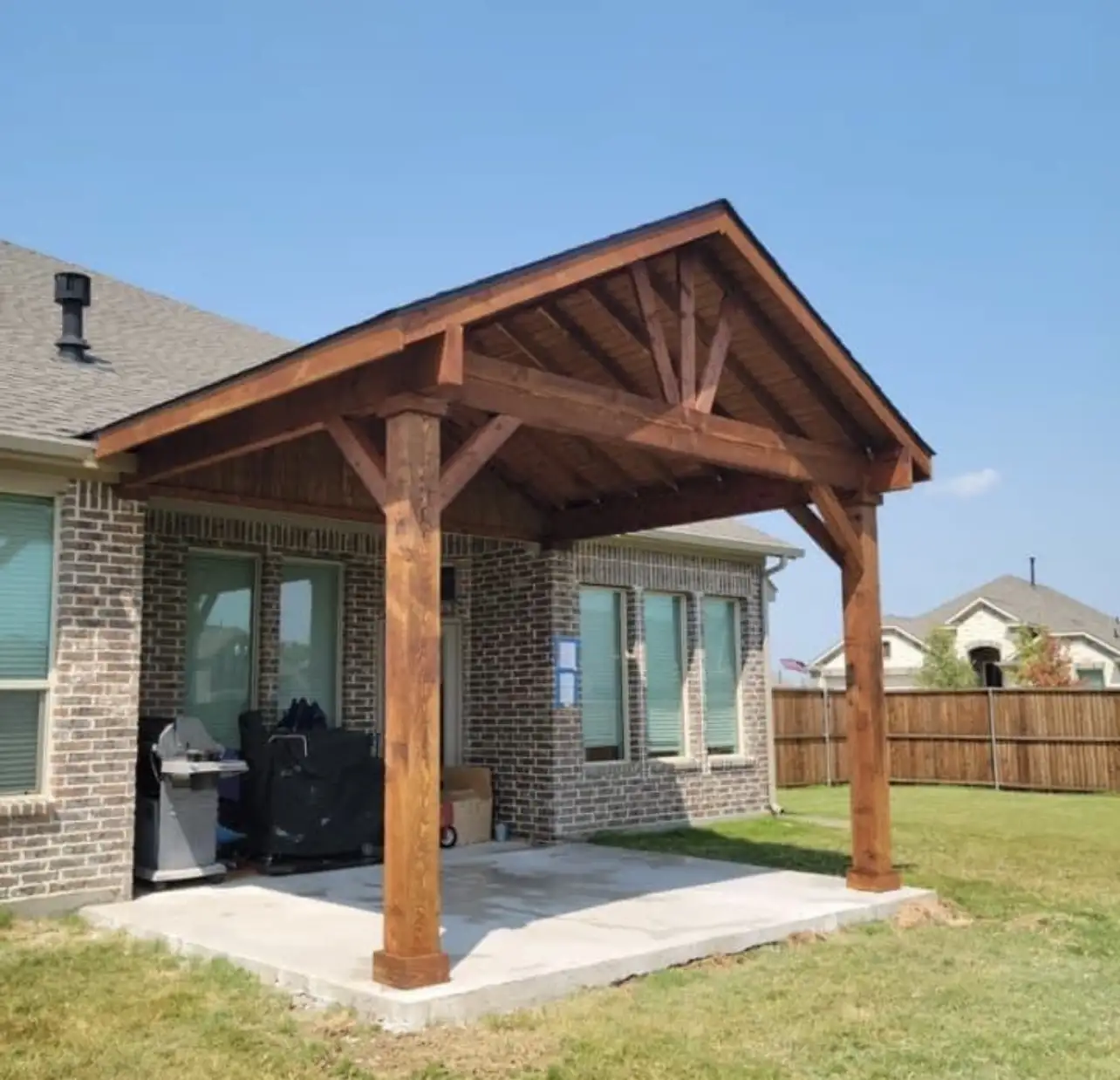
Extend your home with a cover that ties into the roofline and opens up the back of the house.
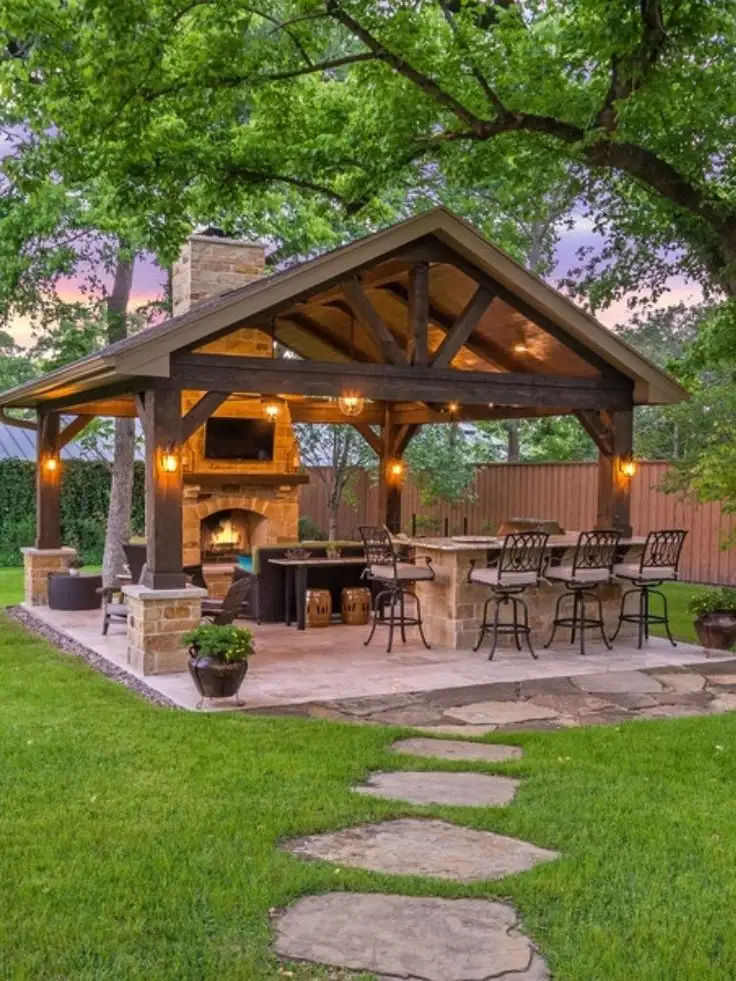
Create shade anywhere on your property, from the pool deck to a corner of the yard.
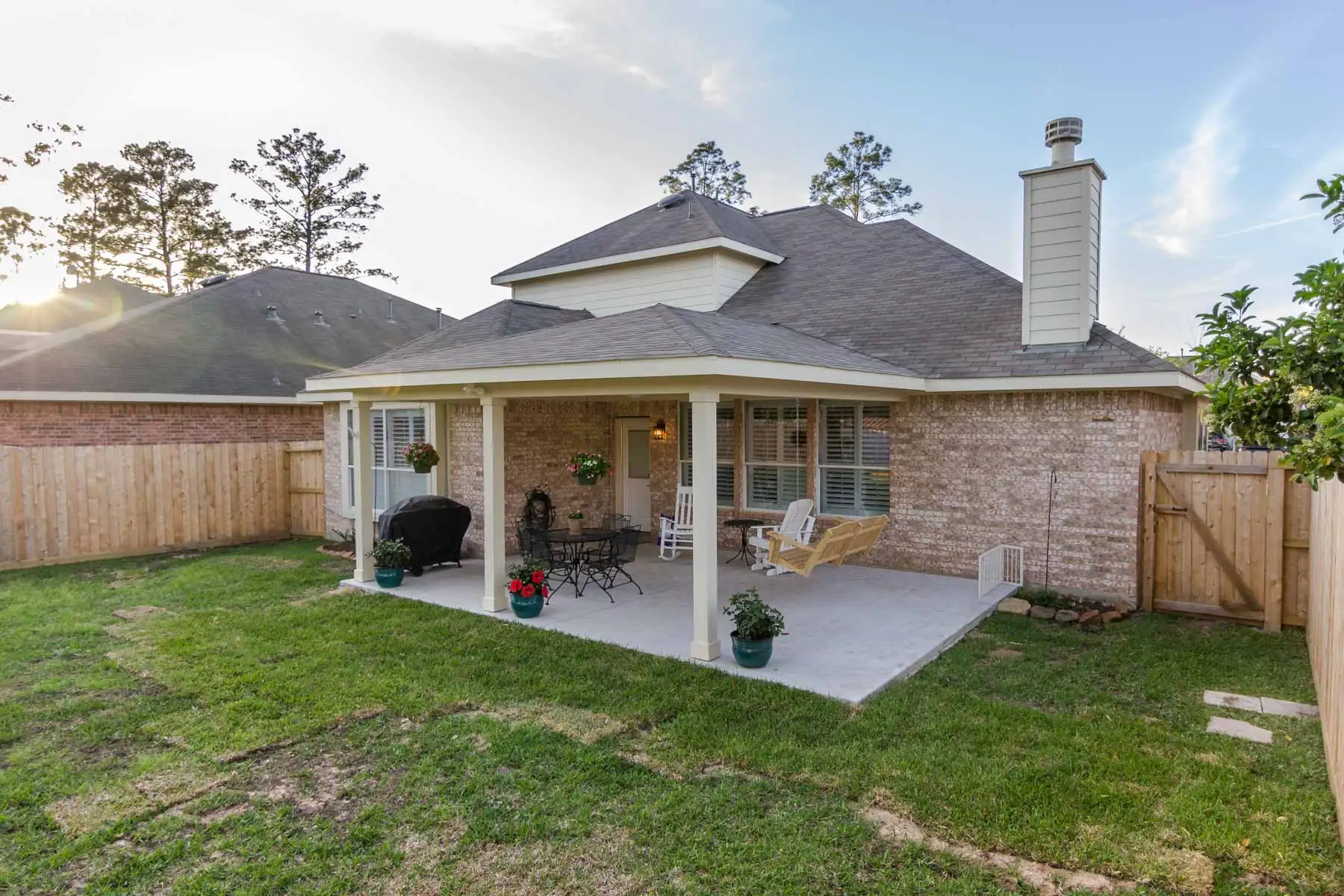
Full shade and rain protection, with a roof that matches the materials on your home.
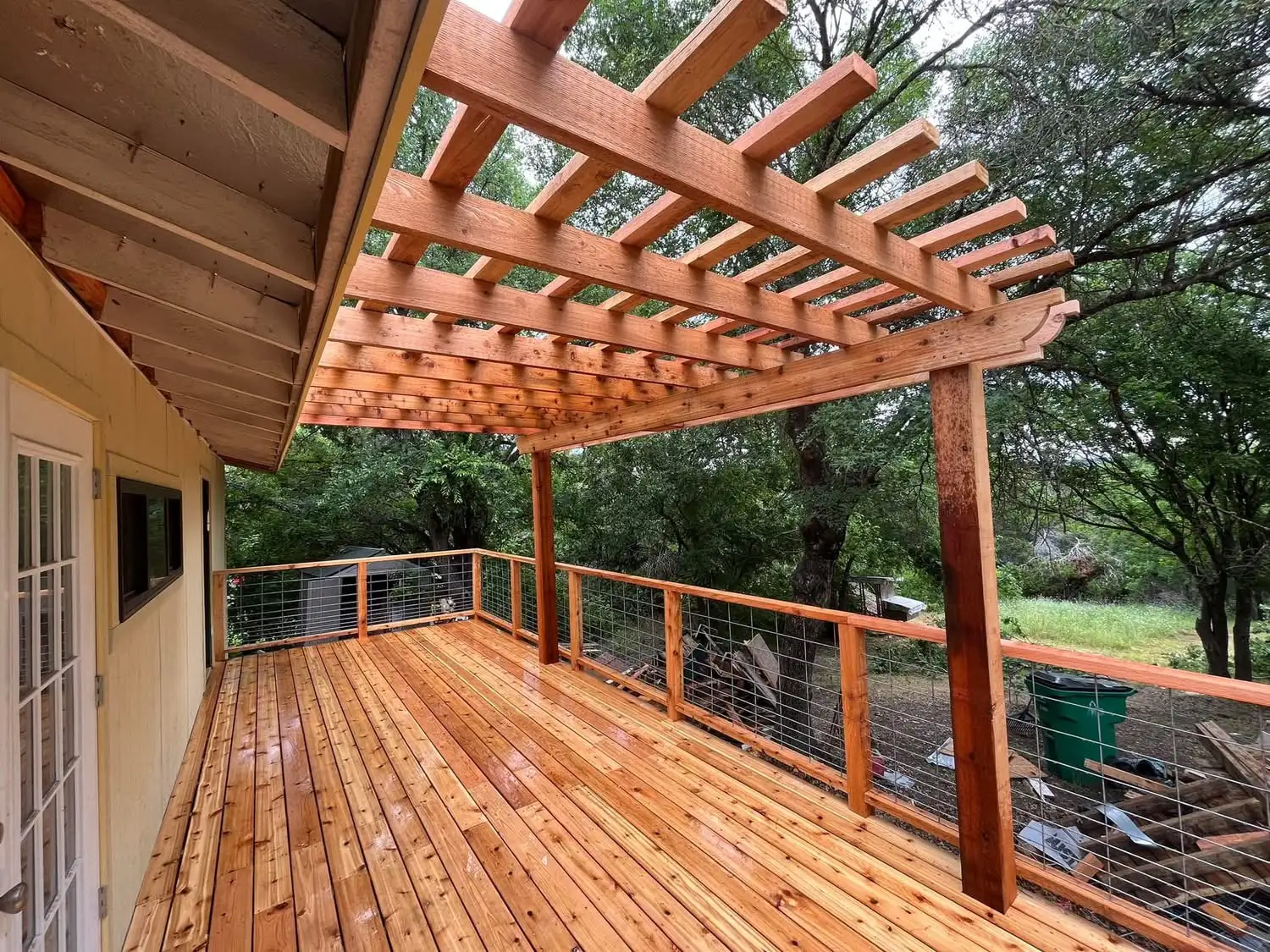
Open rafters or a mix of solid and open roof for filtered light and a lighter look.
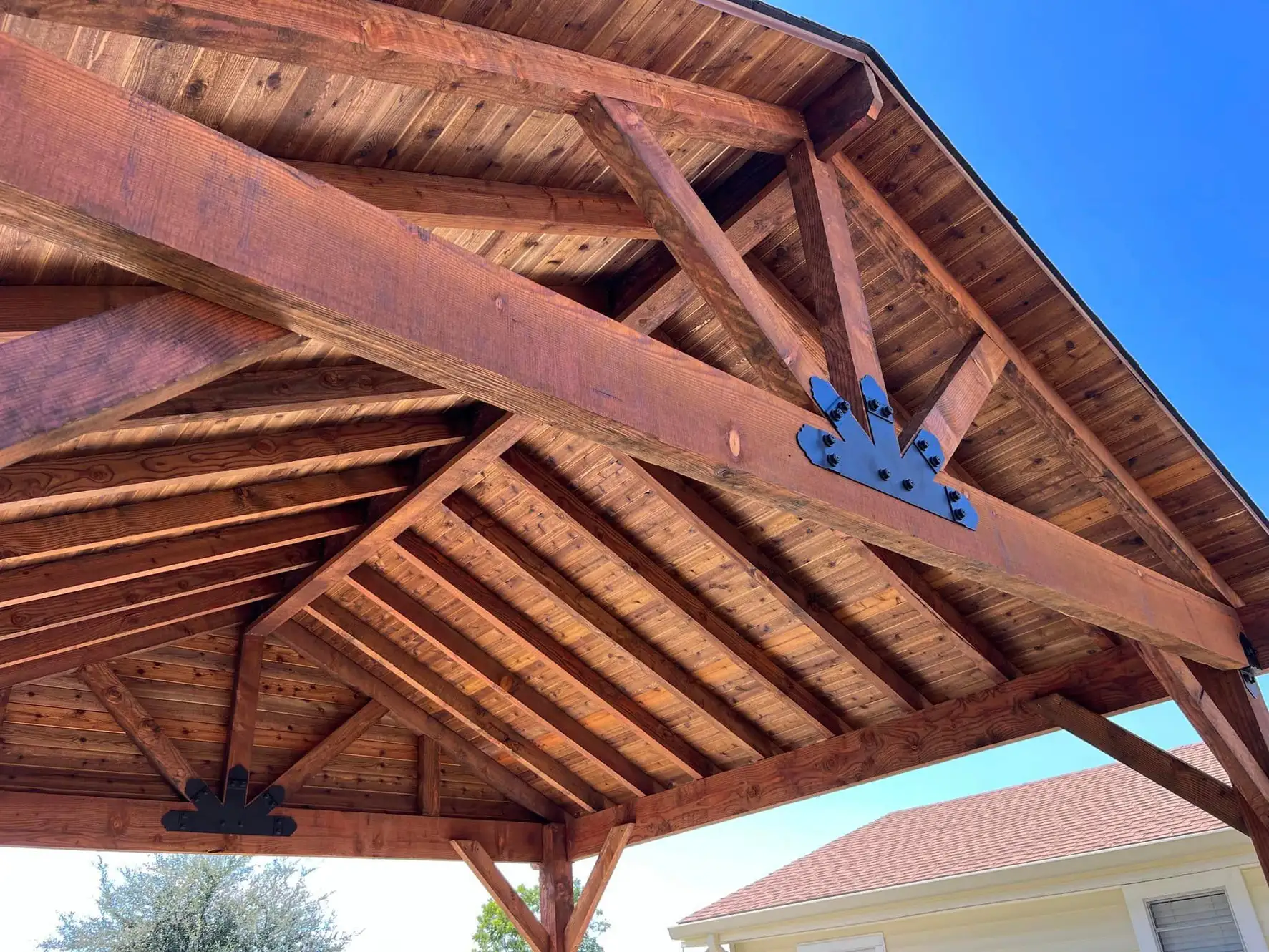
Built for West Lake Hills & West Austin
We design around the way the sun moves across your property, how you use the space and what a Texas summer demands. Pitch, overhang and ceiling height all work together to keep the patio usable all day.
Featured Project
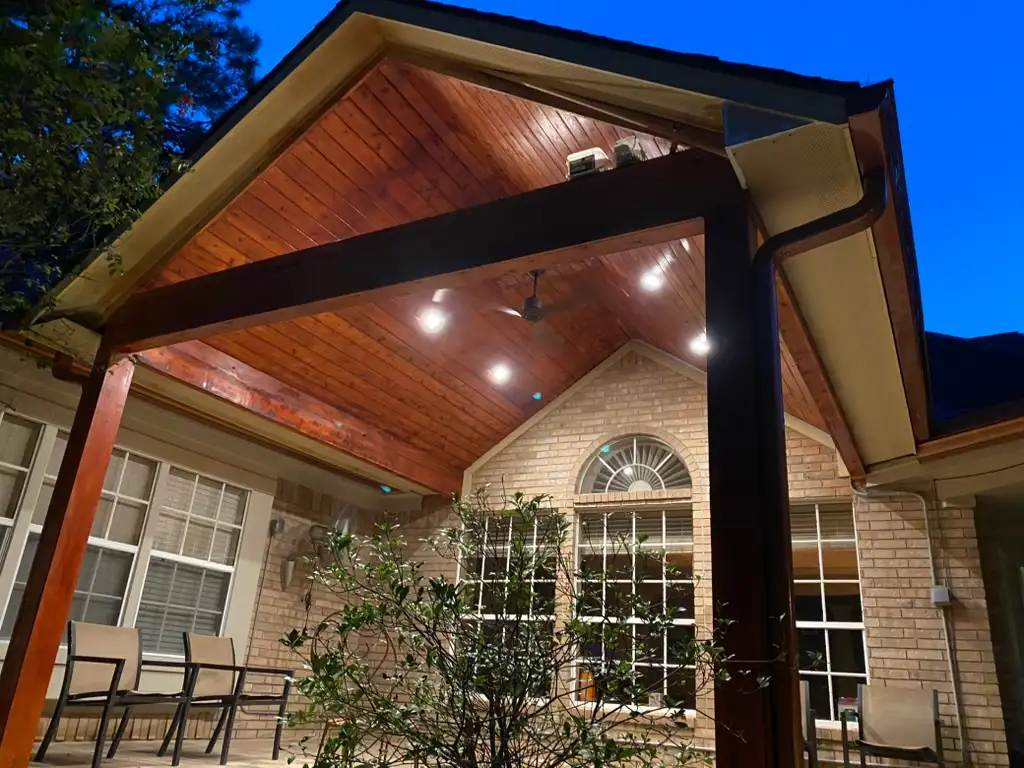
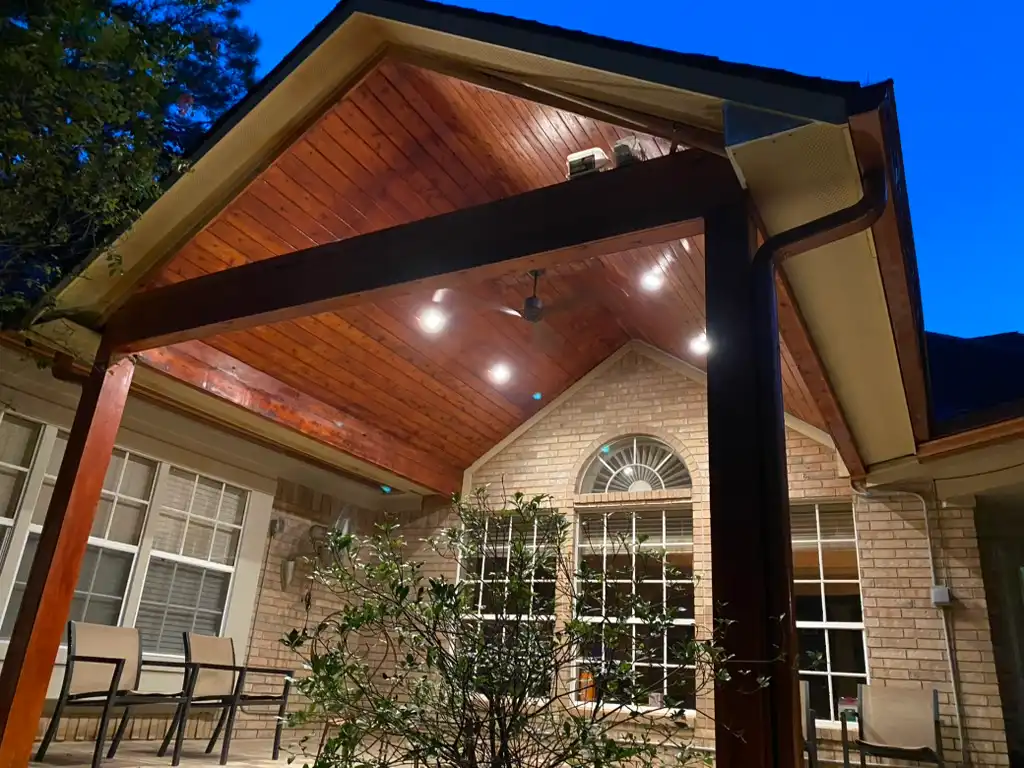
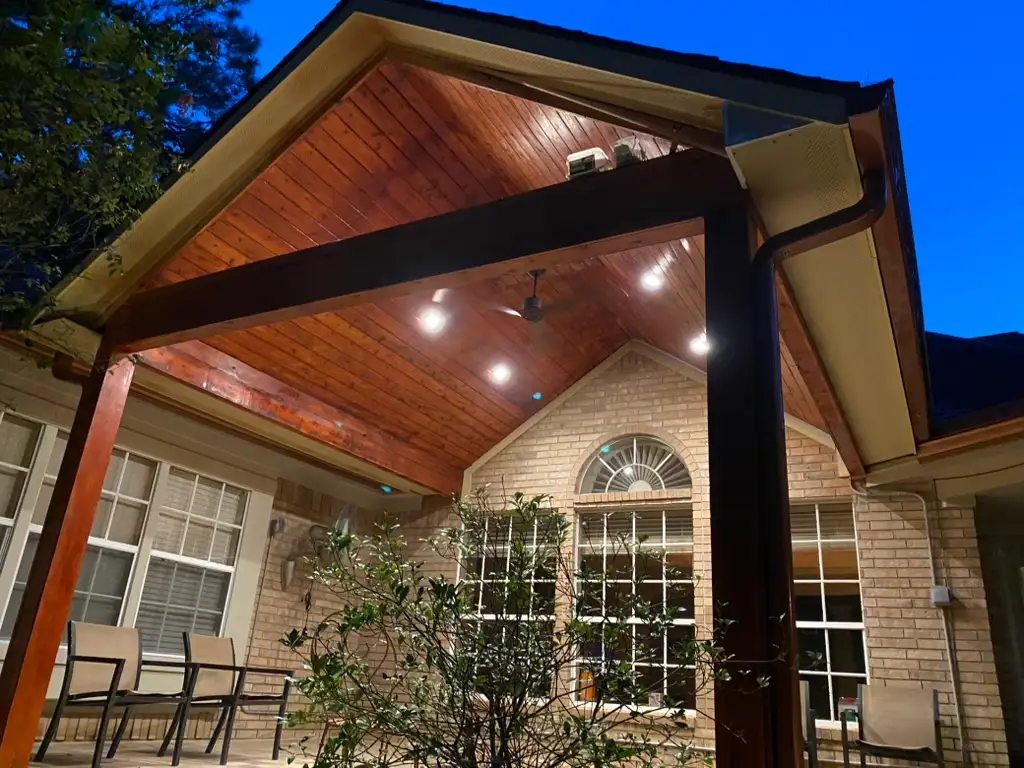
This attached gable cover follows the home’s roofline and ties into its gutters. A stained tongue-and-groove ceiling, heavy beam and posts, recessed lighting and a ceiling fan turn the patio into a shaded outdoor room that glows after dark.
I’ve had Ricardo and his guys do a few things around my house and I am always very happy with the work! … Ricardo has been very communicative throughout the whole process. They expanded my patio … They are some hardworking guys!
Our Process
Tell us about your patio, your goals and how you want to use the space.
We evaluate the site, walk through roof style and finishes, and send a detailed written proposal.
Our crew builds your cover, usually in about a month from final design.
Final walkthrough and our 2-year workmanship warranty.
Frequently Asked Questions
Straight answers on cost, materials, timelines and more.
Price depends on size, roof style, whether it attaches to the house, the ceiling finish and add-ons like lighting and fans. A simple attached cover and a large freestanding structure are very different projects, so after a site visit we give you a detailed written proposal covering scope, materials, timeline and every cost.
An attached cover ties into your home’s structure and roofline, so it feels like part of the house. A freestanding cover stands on its own, which gives you more freedom on placement when the best spot for shade isn’t right against the house. We design both, and sometimes a combination makes the most usable layout.
We use a variety of materials, chosen to match your house and make your patio the spot everyone wants to be. We’ll walk you through the options for the roof, ceiling and finishes so the cover looks like it was always part of the home.
Yes, and most clients do. We build blocking and electrical rough-in into the framing during construction, so recessed lights, pendants and fans mount cleanly. It costs less and looks better than adding them later, so bring it up early in the design.
Most patio cover projects take about a month from final design to completion, depending on the size of the project and scheduling. You get a timeline in the proposal before anything starts.
Yes. We match the roof pitch to your existing roofline, use fascia and trim that match the house, and size posts and beams to the home’s proportions. The goal is a cover that looks like it was always part of the property.
It can if it’s designed poorly. We plan the pitch, ceiling height and ceiling finish so light still reaches nearby windows. A gable roof with a raised ceiling, for example, lets in far more light than a low, flat cover.
Most HOAs review patio covers for materials, color and fit with the neighborhood. We can help you prepare what your HOA needs, and a cover that matches the home’s palette and roofline usually moves through review without trouble.
Ready to Get Started?
Tell us about your patio and what you want the space to do. We’ll walk your property, talk through the right type of cover and send a written proposal with no obligation.