
Why You Need a Landscape Plan Before You Start Any Project in Austin
Most landscape projects in Austin start the same way. A homeowner decides they want a patio, or a retaining wall, or some new sod, and they call a contractor to get it done. That’s a reasonable way to start. But somewhere between the first conversation and the finished project, a lot of people wish they had thought through the bigger picture before committing to anything. A plan—even a simple one—changes the way every individual decision gets made, and it almost always saves money in the long run.
The Problem With Going Piece by Piece
There’s nothing wrong with tackling your yard in phases. Most people do, and it makes financial sense to spread work out over time. The problem isn’t phasing—it’s when each phase gets designed and built without any awareness of what comes next.
We see this regularly in West Austin and the Hill Country. A homeowner installs a beautiful flagstone patio, then a year later decides they want a pergola over it—only to find that the footings need to go exactly where the stone was just laid. Or they put in sod, then want to add a garden bed along the fence and realize the grade they created doesn’t drain correctly toward where the bed needs to go. These aren’t catastrophic mistakes, but fixing them costs real money and creates real frustration. A basic plan upfront prevents most of it.
What a Landscape Plan Actually Is
A lot of people hear “landscape plan” and picture something formal and expensive—an architect’s drawing with precise measurements and plant schedules. That version exists, and for large or complex projects it’s worth it. But a plan doesn’t have to be that involved to be useful.
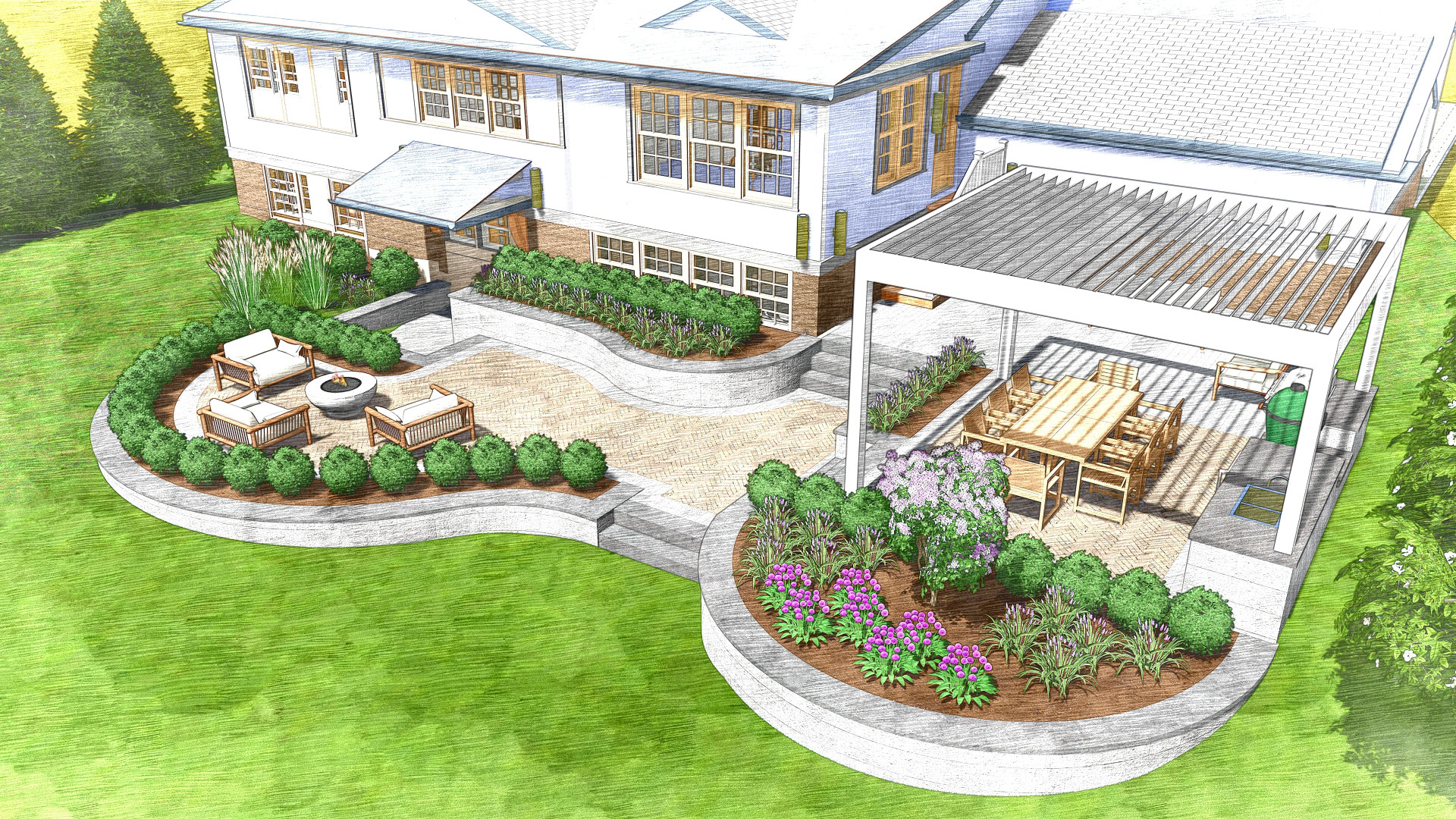
At its most basic, a landscape plan is just a clear picture of where things go and in what order. It accounts for how water moves across your property, where utilities are buried, what structures might be added later, and how each element relates to the ones around it. It doesn’t have to be a document you frame and hang on the wall. It just has to exist before anyone starts digging.
For most residential yards in Austin, a working plan might be nothing more than a simple scaled sketch with notes on drainage, zones, and sequencing. The goal isn’t perfection—it’s avoiding the kind of decisions that seem fine in isolation but cause problems when the next project starts.
Austin’s Terrain Makes This More Important Than Most Places
Landscaping in Austin is harder than it looks. The Hill Country topography means a lot of lots have significant grade changes, exposed caliche, shallow soil over rock, and drainage patterns that aren’t obvious until something goes wrong. Live oaks drop branches and create irregular shade patterns. Summers are long and brutal. Flash flooding is a real concern in certain neighborhoods.
These aren’t reasons to be intimidated—they’re reasons to think ahead. A yard that drains correctly, uses the right plants in the right spots, and has hardscaping that was placed with the full picture in mind will look better and require less maintenance than one that was figured out on the fly. Austin’s conditions are specific enough that the margin for error is lower than it would be in a more forgiving climate.
The Sequencing Problem
One of the most practical reasons to plan ahead is sequencing. Landscape projects have a natural order, and violating it creates inefficiency. You grade before you sod. You run irrigation before you lay stone. You rough in electrical for future lighting before the patio goes down. You plant trees before you design the garden beds around them.
When there’s no plan, sequencing decisions get made by whoever is on site at the time, and those decisions are made without the context of what’s coming next. A contractor installing a retaining wall doesn’t know you’re planning to build a deck six feet away next spring unless you tell them—and telling them is a lot easier when you have something on paper.
It Helps With Budgeting Too
A plan also makes it significantly easier to budget realistically, which matters a lot in a market like Austin where material and labor costs have moved considerably in recent years. When you know the full scope of what you eventually want, you can make smarter decisions about what to build now and what to defer. You might find that doing the grading work now—even if you’re not ready for sod—saves you from paying for it twice. Or that routing the irrigation to include zones you don’t need yet costs very little while the crew is already on site.
Without a plan, every phase feels like a fresh project with fresh costs. With one, you’re building toward something.
You Don’t Have to Do It All at Once
A plan is not a commitment to spend a certain amount of money or finish everything in a single season. It’s just a framework that helps you make better individual decisions as you go. Some homeowners we work with have a five-year plan and execute one phase a year. Others move quickly once they see how the pieces fit together. Either approach works better than winging it.
If you’re starting to think about your yard—whether it’s a single project or a full transformation—the best first step is usually a conversation about the full picture before anything hits the ground. It doesn’t cost much to plan well. It can cost a lot not to.
Thinking about where to start? Request a free consultation and we’ll help you put together a plan that fits your property, your budget, and how you actually want to use your outdoor space.