
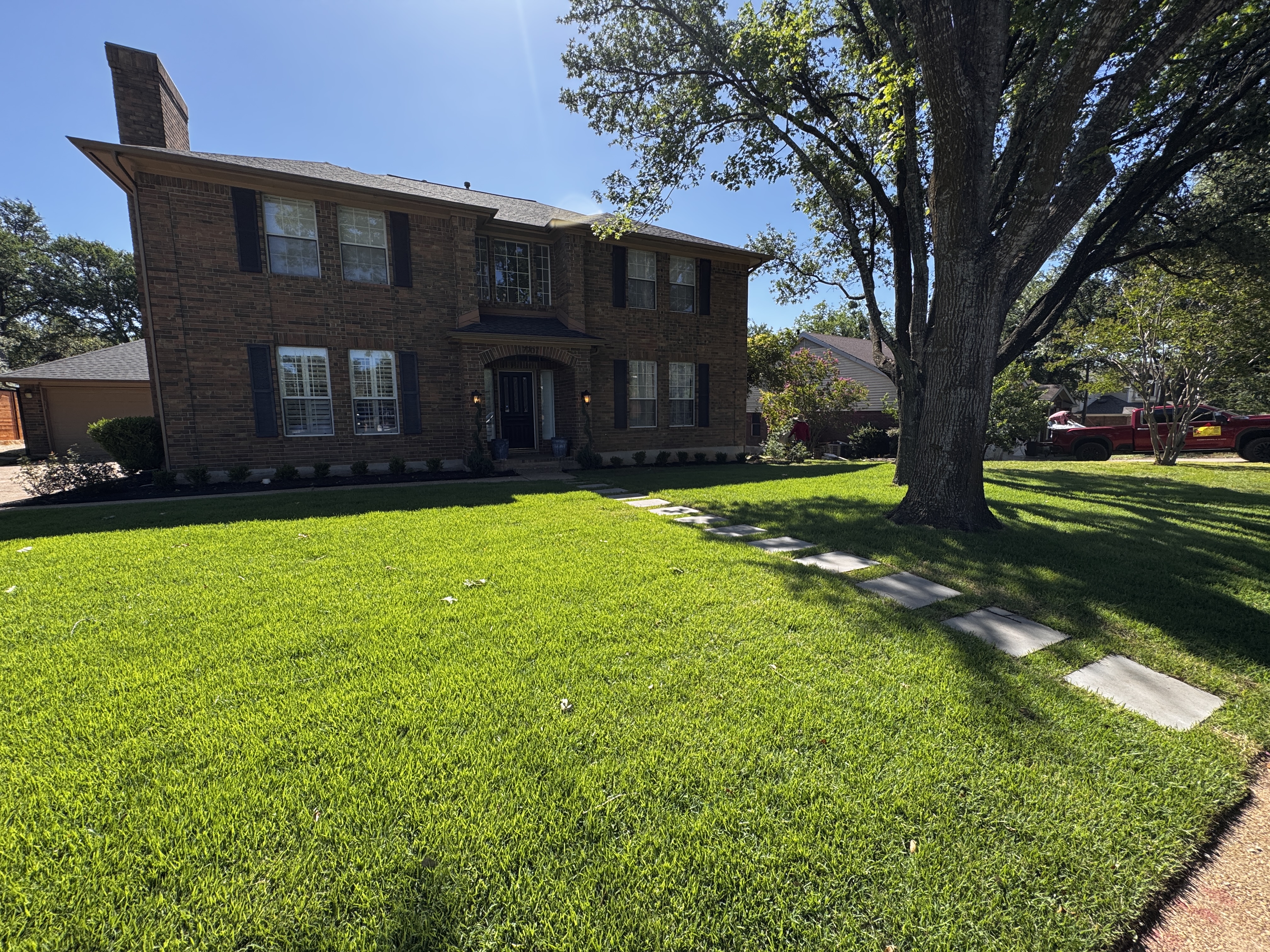
How to Choose the Right Sod for Your West Austin Yard
Not all grass is created equal, especially in Austin. The difference between a lawn that thrives and one that struggles often comes down to matching the right turf to your specific conditions—sun exposure, soil depth, foot traffic, and how much maintenance you’re willing to commit to. We’ve installed a lot of sod in the West Austin and Westlake area, and the same question comes up almost every time: which grass is right for my yard? The answer depends on a few things, and it’s worth understanding your options before you commit.
Palisade Zoysia: The Versatile Choice
Palisade Zoysia is our preferred option for about 75% of installations in the West Austin and Westlake area, and for good reason. It’s one of the few warm-season grasses that handles both full sun and partial shade without skipping a beat—which matters a lot on Hill Country lots shaded by large live oaks. Most yards out here aren’t fully sunny or fully shaded, and Palisade handles that in-between situation better than almost anything else.
Beyond adaptability, it’s also a genuinely pleasant grass to live with. The texture is dense and refined, soft underfoot, and it holds up well to kids, dogs, and regular use. Once it’s established, it stays green with less water than you’d expect. If you’re looking for a grass that performs well without constant attention, Palisade is almost always the right call.
St. Augustine: The Shade Specialist
For yards with heavy tree canopies or north-facing exposures where other grasses just won’t cut it, St. Augustine is the reliable choice. It’s been the go-to Texas lawn grass for decades, and it earns that reputation with its ability to thrive in low-light conditions and fill in bare areas quickly. The broader, lush blades give it that classic, full lawn look that a lot of homeowners are after.
The tradeoffs are worth knowing going in. St. Augustine needs more consistent watering than Zoysia, and it’s more susceptible to chinch bugs and fungal issues during wet summers. None of that makes it a bad choice—it just means your irrigation scheduling needs to be dialed in. For the right yard, it’s hard to beat.
Bermuda: Built for Full Sun
If your yard gets six or more hours of direct sun every day and takes a beating from foot traffic, Bermuda is worth a serious look. It’s tough, fast to establish, and recovers from damage quickly—which is why you’ll see it on athletic fields and high-use areas. It’s the most resilient option we install, and in the right conditions it’s essentially bulletproof.
That said, it comes with a couple of things to think about. Bermuda goes dormant in winter and turns brown, which some homeowners are fine with and others aren’t. It’s also aggressive—it will creep into garden beds and hardscape joints if you’re not edging it consistently. For an open, sunny yard where durability is the priority, it’s an excellent grass. Just go in with clear expectations.
Installation Matters as Much as Grass Selection
Choosing the right variety is only half the equation. Even the best sod fails when the ground prep is rushed or skipped. Every installation we do starts with stripping out all existing grass, weeds, and roots—not just mowing them down, but fully removing the organic matter. From there, we bring in topsoil to reach proper grade, which is especially important in rocky Hill Country soils where the existing dirt often isn’t deep enough to support strong root development.
Grading gets a lot of attention in our process because it determines how water moves across the yard. Everything needs to slope away from structures so drainage works the way it should and water doesn’t pool. Once the sod goes down, we cut and fit pieces carefully for clean edges, then roll the entire surface to eliminate air pockets—those unseen gaps between the sod and soil are a primary cause of dry spots and failed root zones. We finish every installation with a clear watering plan so homeowners know exactly what the first three to four weeks should look like.
Skipping any of these steps, especially in our caliche-heavy soils, is the number one reason new sod struggles to take hold.
The Bottom Line
Match the grass to your conditions, prep the ground properly, and water consistently in the first few weeks. That combination is how you get a lawn that establishes fast, fills in evenly, and holds up through a Texas summer. There’s no single right answer for every yard, but there’s almost always a clear best fit once you look at the sun exposure, the soil, and how the space gets used.
Questions about which sod is right for your yard? Request a free consultation and we’ll assess your conditions before recommending anything.