
Best Backyard Shade Options for Texas Heat (What Actually Works)
Texas heat exposes weaknesses in outdoor design faster than almost any other climate. Long summers, high UV exposure, reflected heat from hardscapes, and low wind movement in many neighborhoods mean that shade alone is not enough. Shade must be designed around sun angle, airflow, material heat retention, and orientation.
This guide breaks down the backyard shade options that actually perform in Texas conditions, why some common solutions fail, and how to choose the right approach based on how you use your space.
Covered Patios (Most Effective but Most Commonly Misdesigned)
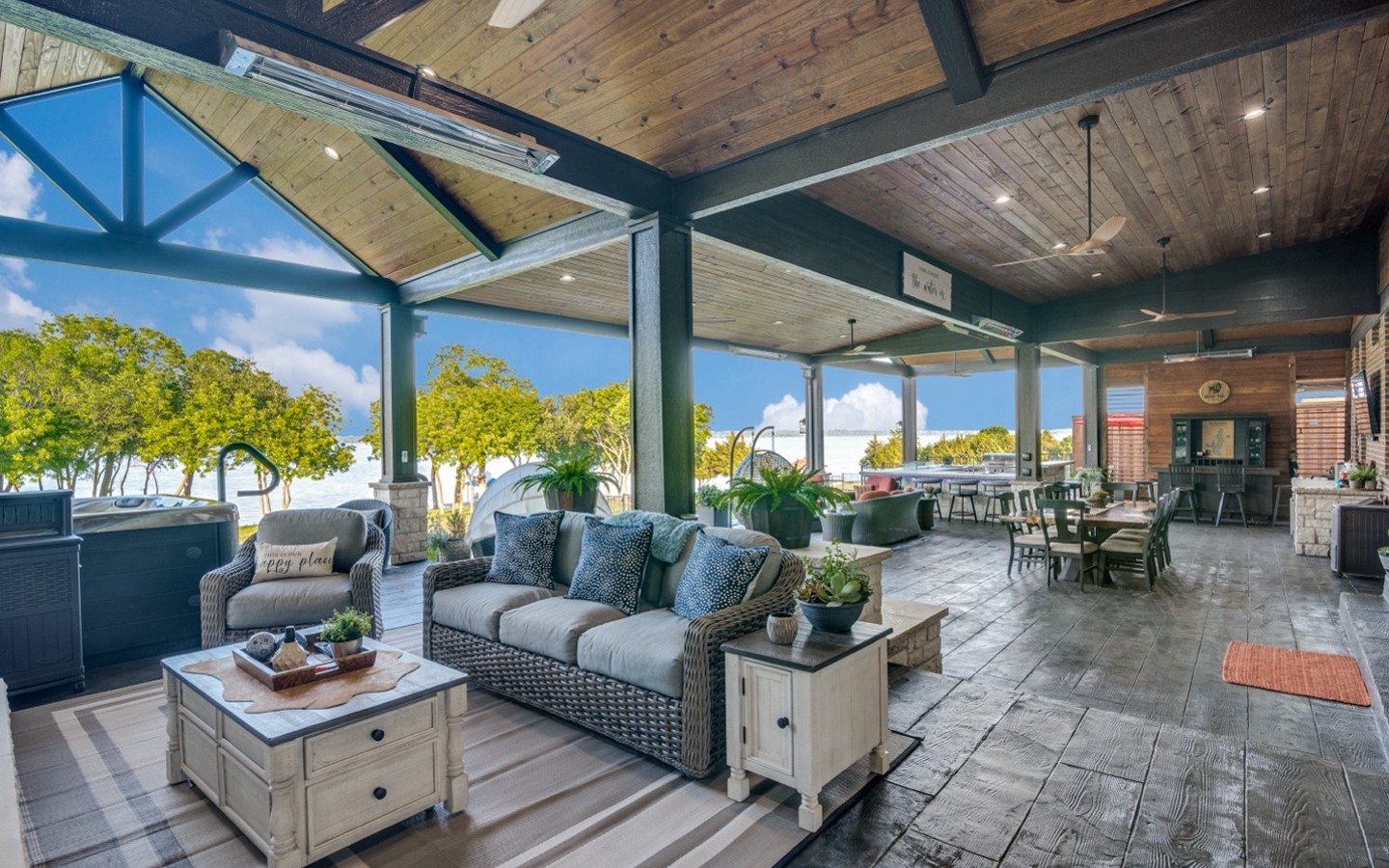
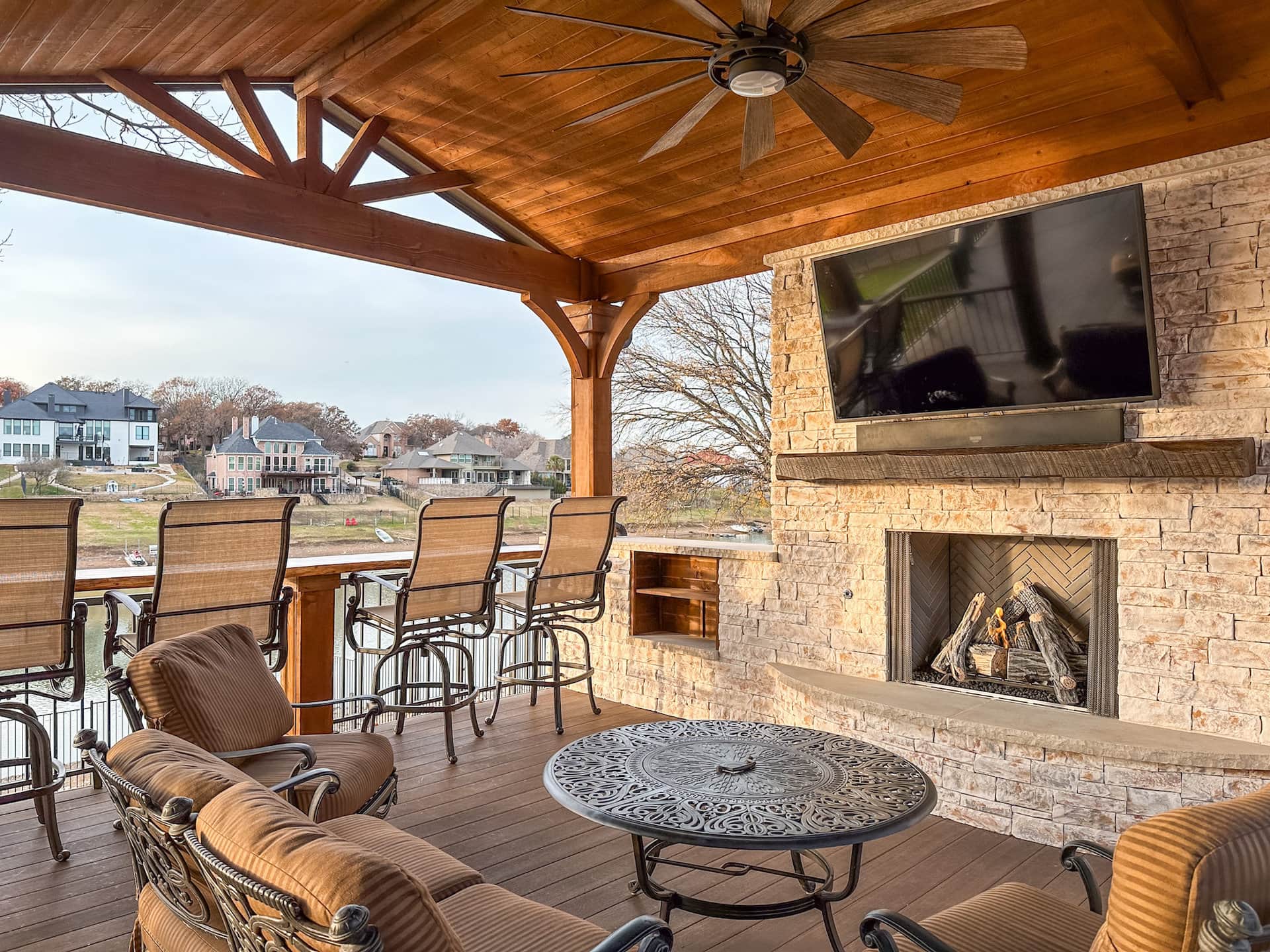
A covered patio provides the highest level of solar protection, but it is also the shade structure most likely to be built incorrectly.
Why covered patios work in Texas
A properly designed covered patio:
- Blocks direct solar radiation entirely
- Reduces surface temperatures on concrete and pavers
- Creates a controllable microclimate
- Allows mechanical airflow (fans)
- Protects from rain and UV year-round
This makes it the only shade solution that can reliably support outdoor kitchens, seating areas, and extended daily use.
Where most covered patios fail
Covered patios often fail because they are designed like architectural add-ons instead of thermal systems.
Common problems include:
- Insufficient roof pitch, which traps hot air
- Shallow coverage, allowing low afternoon sun to penetrate
- No ventilation path, causing heat to pool under the roof
- Dark roofing materials, which radiate heat downward
In Texas, a poorly ventilated covered patio can be hotter than standing in open shade.
Design details that matter
- Roof pitch: Steeper pitches allow hot air to rise and exit
- Depth: West-facing patios require deeper coverage to block low sun
- Ventilation: Ridge vents, gable vents, or open sides are critical
- Fan integration: Fans should be sized for the space, not decorative
Roofing materials and heat performance
- Insulated panels reduce radiant heat transfer
- Metal roofing must include ventilation to avoid heat buildup
- Shingle systems work when properly vented and oriented
Best for: homeowners who want maximum comfort, long dwell time, and a true outdoor living room.
Pergolas (Airflow First, Shade Second)
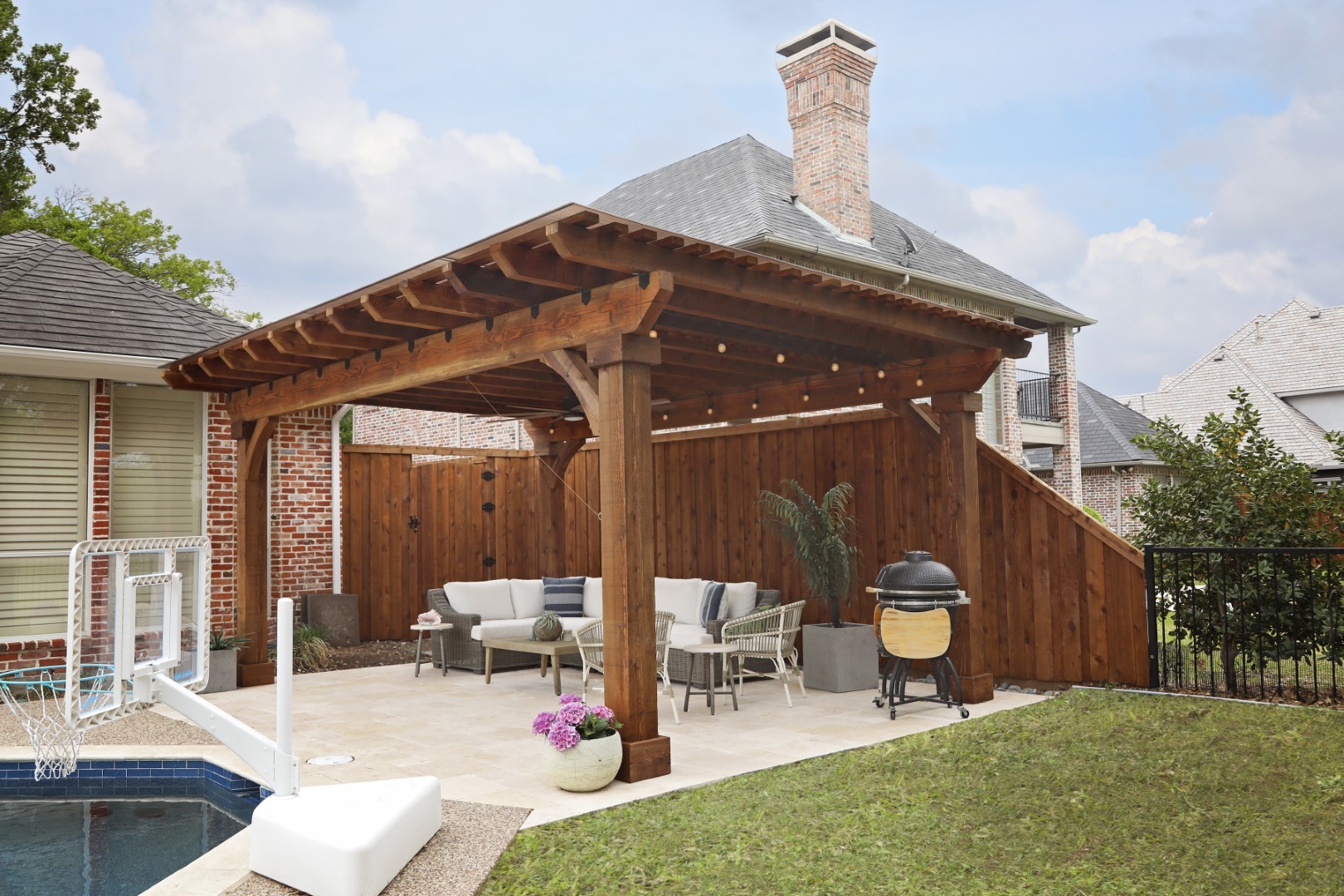
Pergolas perform well in Texas because they prioritize airflow over enclosure.
Why pergolas work in extreme heat
Pergolas allow hot air to escape vertically rather than trapping it overhead. This makes them feel cooler than solid covers in many situations, even though they provide less total shade.
Their effectiveness depends heavily on orientation and slat geometry.
Understanding sun angles in Texas
In summer, the sun is high overhead. Flat or poorly spaced slats allow significant solar penetration during peak hours. In winter, lower sun angles may pass beneath slats entirely.
Pergolas must be designed around:
- Slat spacing
- Slat orientation
- Time of day usage
- Primary seating zones
Common pergola misconceptions
- Pergolas are not full shade structures
- They do not block rain
- They do not automatically cool a space
- Visual density does not equal thermal performance
When pergolas work best
- Morning or evening use
- Poolside areas where airflow matters
- Spaces where visual openness is important
- Yards where solid roofs would trap heat
Best for: homeowners who value airflow and aesthetics over total sun block.
Pergolas With Added Shade Elements (Best Balance for Texas)
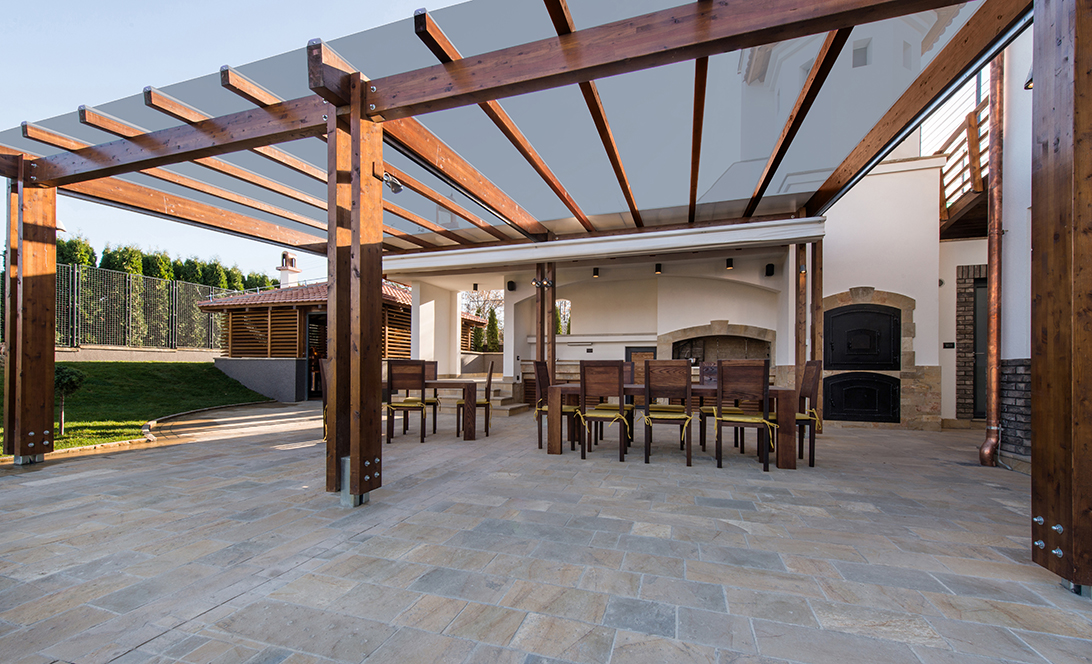
Hybrid pergola systems are often the most effective overall solution when designed intentionally.
Why hybrids outperform basic pergolas
Hybrids address the main pergola weakness — direct sun — while preserving airflow.
Effective hybrid elements include:
- Tighter or angled slat spacing
- Retractable fabric shade panels
- Polycarbonate or tinted roof panels
- Vertical curtains or screens for west-facing sun
Heat behavior in hybrid systems
Hybrid pergolas reduce direct radiation while still allowing:
- Hot air to escape
- Wind movement through the structure
- Adjustable shade depending on season
This makes them more adaptable than solid roofs and more comfortable than open pergolas.
Design considerations
- Panels should not fully seal the roof unless ventilation is added
- West-facing sun often requires vertical mitigation, not overhead shade
- Materials should resist UV degradation
Best for: homeowners who want flexibility, airflow, and targeted sun control without full enclosure.
Ceiling Fans and Mechanical Airflow (Mandatory, Not Optional)
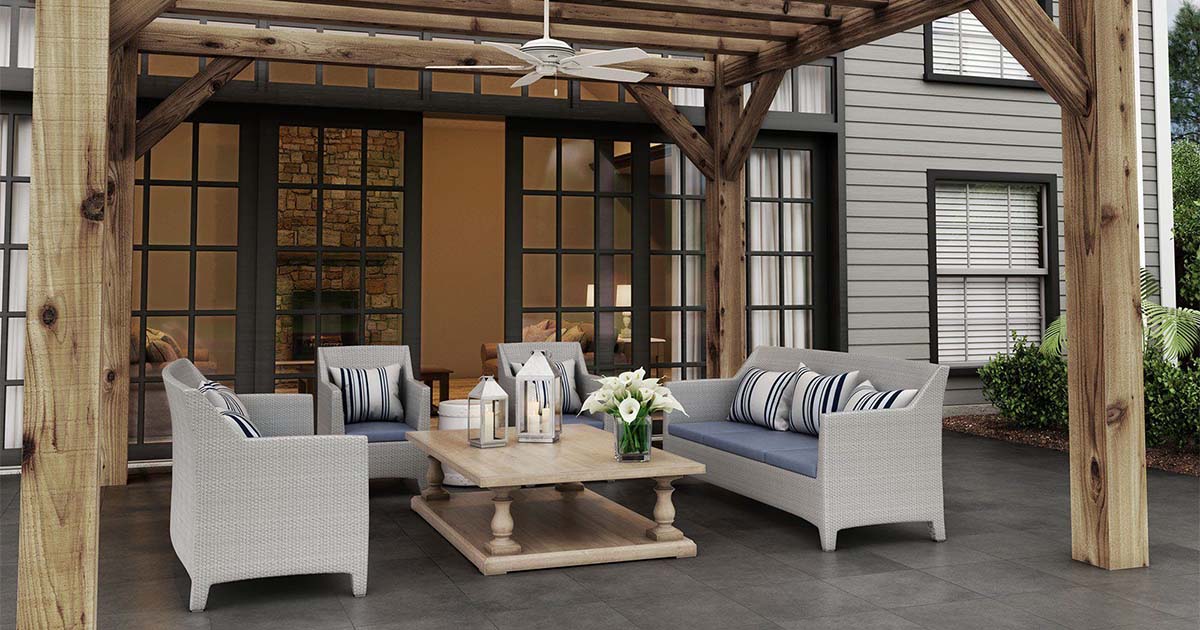
Air movement is one of the most overlooked factors in outdoor comfort.
Why airflow matters more than temperature
Moving air increases evaporative cooling on skin, reducing perceived temperature by 5–10°F or more, even when actual air temperature remains high.
Common airflow mistakes
- Fans that are too small for the space
- Fans mounted too high or too low
- Obstructions that block circulation
- Assuming shade alone is sufficient
Best practices
- Fan diameter should match patio size
- Blades should sit within the occupied air zone
- Airflow paths should remain unobstructed
In Texas, a shaded space without airflow is rarely comfortable for long.
Shade Sails (Supplemental Only)
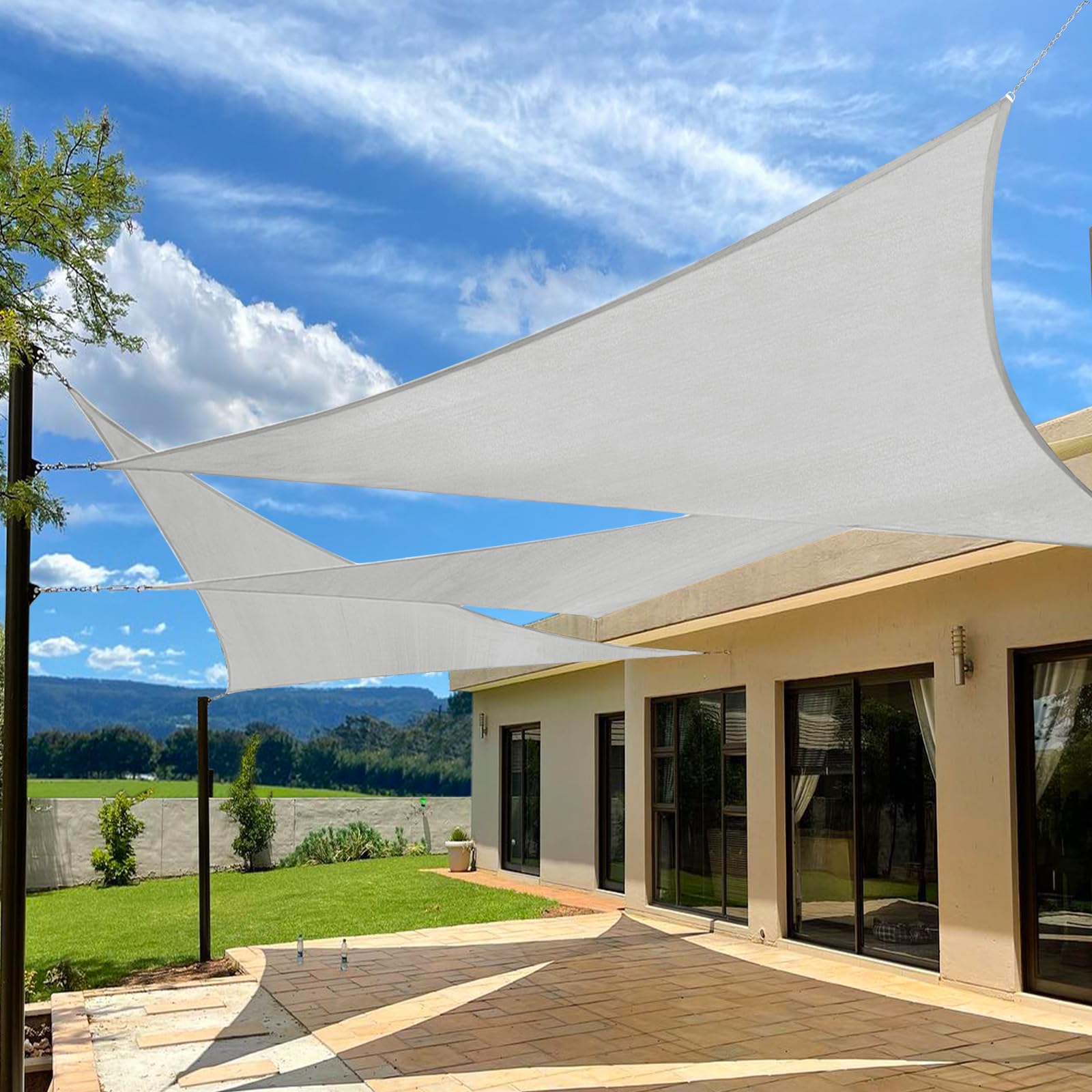
Shade sails are often chosen for cost or aesthetics but have clear performance limits.
Where shade sails work
- Small seating areas
- Secondary zones
- Temporary or seasonal shade needs
Where they fail in Texas
- No rain protection
- Limited coverage area
- UV degradation over time
- Wind load issues during storms
Shade sails should be viewed as supplemental shade, not primary living-space solutions.
Natural Shade (Long-Term Planning Tool)
Trees provide excellent shade once mature, but they are not immediate solutions.
Practical realities
- Most trees require years to provide usable canopy
- Root systems must be considered near structures
- Canopy placement must align with sun paths
Natural shade works best when paired with built shade structures during early years.
How to Choose the Right Shade Strategy
The correct shade solution depends on:
- Sun direction throughout the day
- Duration of use
- Seating and activity locations
- Desire for rain protection
- Tolerance for enclosure vs openness
In Texas, design errors cost more than material upgrades. A well-designed moderate system will outperform an expensive poorly designed one.
Final Thoughts
If your backyard feels unusable in summer, it is rarely because of square footage. It is almost always because shade, airflow, and orientation were not designed as a system.
The best backyard shade solutions in Texas are not about adding cover — they are about managing heat intentionally.