
Composite Decking and Texas Heat: Why Framing Matters
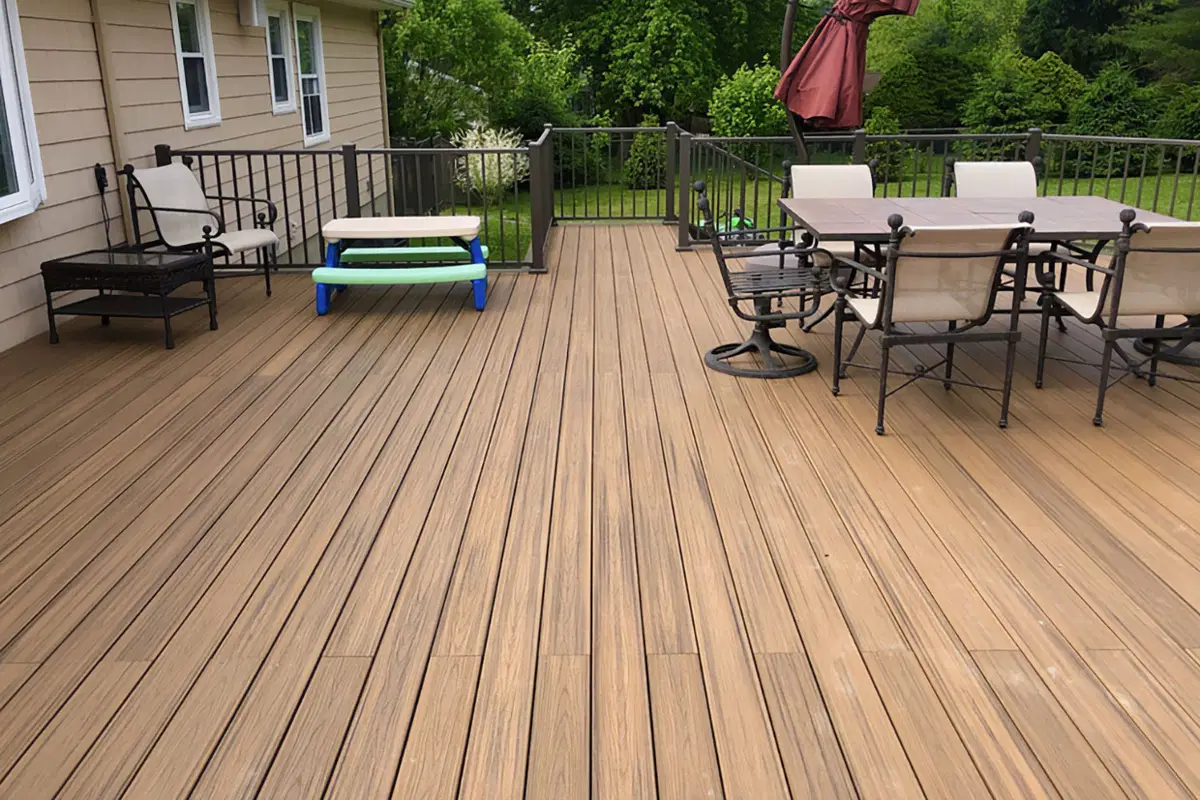
Composite and PVC decking from brands like Trex, TimberTech, Azek and Bear Board depend heavily on proper framing. In the Austin area, especially West Austin, West Lake Hills, Lakeway and Bee Cave, summer heat makes composite boards expand, soften and flex more than traditional wood.
Most manufacturers allow 16-inch on-center joists for standard residential decks with boards running straight across the joists, and call for tighter spacing on diagonal layouts and some products. Always check the installation guide for the exact board you choose. On the composite decks we build, we prefer 12-inch on-center framing whenever the project allows it, for the reasons below.
Why We Prefer 12” On Center
1. Composite Decking Becomes More Flexible in Extreme Heat
Texas summers regularly reach 100 degrees, and composite absorbs significantly more heat than cedar or pressure-treated pine. When boards heat up, they become more pliable, and if the joists are too far apart, the boards can begin to:
- Sag between joists
- Develop noticeable bounce
- Warp or cup over time
- Show surface waves or “oil canning”
Tighter joist spacing reduces the span of each board, which limits that heat-related movement.
2. Less Long-Term Waviness
Even if a deck feels firm initially, composite boards on wider spacing can begin to bow or settle unevenly over the years as they go through daily expansion and contraction cycles. A 12-inch grid gives each board more support and helps the deck stay flat and true.
3. Room for Diagonal Layouts and Warranty Guidelines
Diagonal and herringbone layouts typically require 12-inch spacing under manufacturers’ guides, and building outside a guide can affect the warranty. Framing at 12 inches from the start keeps those layout options open and keeps the build within the guidelines.
4. Long-Term Structural Stability
Texas weather affects the frame as much as the decking:
- UV exposure rapidly dries lumber
- Humidity causes joists to swell and shrink
- Heat cycles loosen fasteners over time
More joists spread the load across the frame and make the whole deck stiffer.
5. A Solid Feel Underfoot
Homeowners notice the difference:
- No hollow flexing
- No “springy” spots
- A quieter, more stable walking surface
A well-framed composite deck feels like a permanent extension of the home.
12” vs 16” at a Glance
| Feature | Wood Decking | Composite Decking |
|---|---|---|
| Heat expansion | Minimal | Significant |
| Board weight | Light | Heavier |
| Flexibility | Rigid | Softer when hot |
| Our preferred spacing | 16” OC | 12” OC |
Composite isn’t wood, and in Austin heat it benefits from a tighter structure. Underframed decking is a common reason composite decks feel bouncy or look wavy after a few summers, and it’s one of the things we check first when a homeowner asks whether an old deck needs repair or replacement.
Conclusion
If you’re building a composite deck in Texas, ask your builder what joist spacing they plan to use. We prefer 12-inch on-center framing for longevity, a solid feel and room for any layout, and we’ll tell you up front when a project calls for something different.
See the composite, ipe, cedar and treated pine options we build with on our custom decks page, or read what homeowners in Lakeway choose for decks and pergolas.